Flame-resistant work clothing explained
Flame-resistant (FR) clothing resists catching fire and stops burning when the heat source is removed, giving workers time to escape. Ordinary cotton keeps burning and polyester can melt onto skin. If your crew faces flash fire or electrical arc hazards, here's what the labels mean.
The standards
| Standard | Covers | Who needs it |
|---|---|---|
| NFPA 2112 | Garments that protect against flash fire | Oil and gas, refineries, chemical and petrochemical plants |
| NFPA 70E | Electrical safety in the workplace, including arc flash protection | Electricians, utility workers, maintenance crews working on energized equipment |
| ASTM F1506 | Performance of FR fabrics for electrical workers | The fabric standard behind most arc-rated garments |
| NFPA 1975 | Flame-resistant station and work uniforms for firefighters | Fire and combination fire/EMS departments |
A garment can meet more than one standard. Many FR work shirts are both NFPA 2112 compliant and arc rated for NFPA 70E.
Arc ratings and PPE categories
An arc rating (shown as ATPV or EBT, in calories per square centimeter) tells you how much heat energy a garment can block. NFPA 70E groups the work into PPE categories, each with a minimum arc rating:
| PPE category | Minimum arc rating | Typical clothing |
|---|---|---|
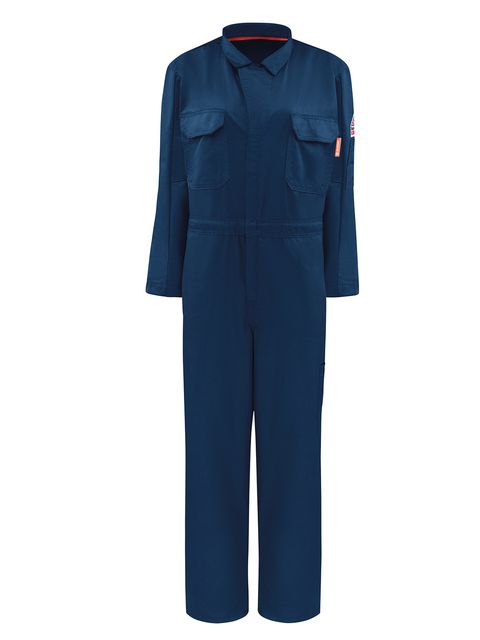
| CAT 1 | 4 cal/cm² | Arc-rated shirt and pants, or coverall |
| CAT 2 | 8 cal/cm² | Arc-rated shirt and pants, or coverall |
| CAT 3 | 25 cal/cm² | Arc flash suit or layered system |
| CAT 4 | 40 cal/cm² | Arc flash suit or layered system |
Your company's hazard assessment sets the required category for each task. Daily-wear FR uniforms are usually CAT 1 or CAT 2.
Inherent vs treated FR fabrics
- Treated FR (such as FR-treated cotton or cotton/nylon blends) is chemically treated to resist flame. It's comfortable and familiar, and many quality treated fabrics are guaranteed flame resistant for the life of the garment when cared for properly.
- Inherent FR (such as Nomex and modacrylic blends) is flame resistant because of the fiber itself. It's typically lighter and can't wash out, at a higher price.
Both protect when they carry the right certification. Choose based on comfort, weight, laundering and budget.
What to buy
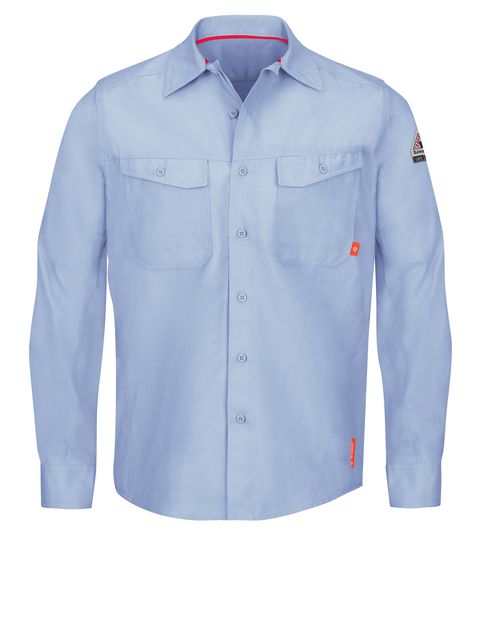
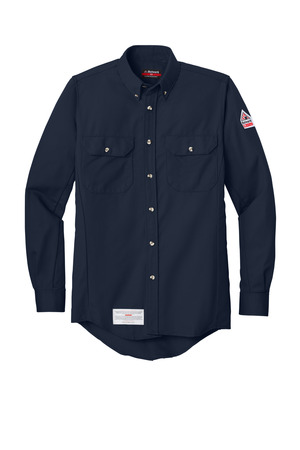
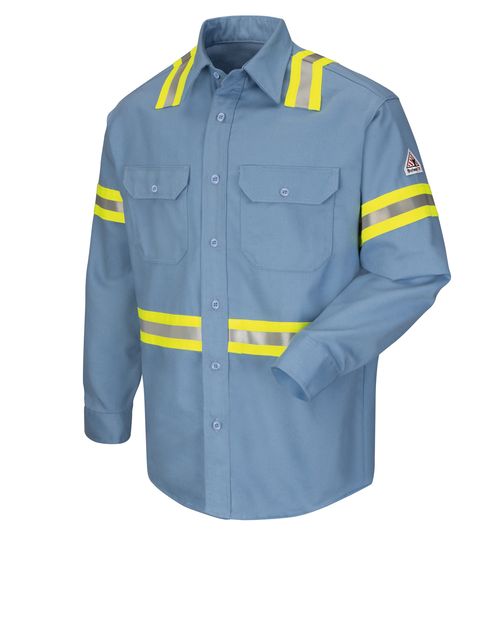
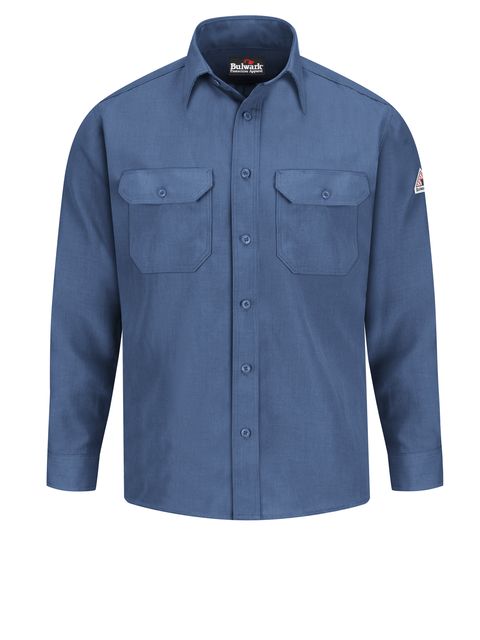
- Shirts: button-front work and uniform shirts, some with reflective striping for crews who need visibility too.
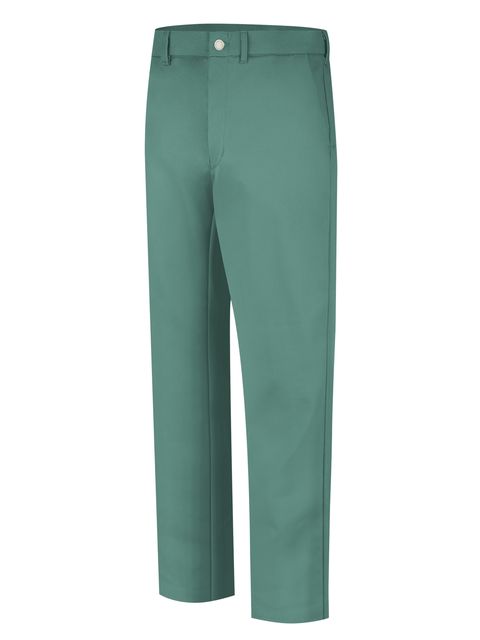
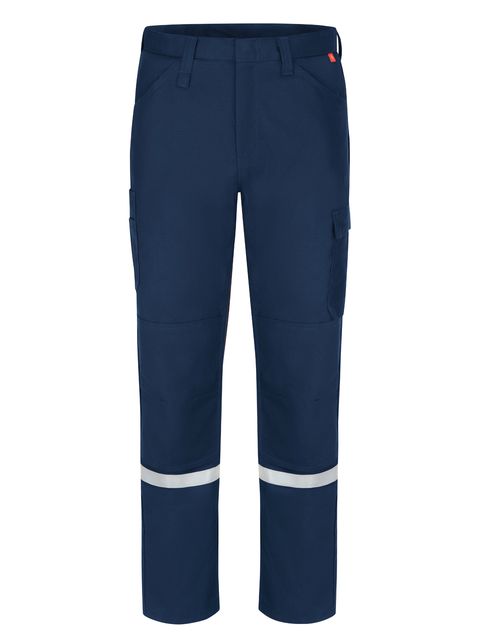
- Pants: work pants and FR jeans.
- Outerwear: FR jackets and sweatshirts, so crews never layer a regular hoodie over their FR uniform.
- Base layers: anything worn under FR clothing should be FR or natural fiber. Synthetic undershirts can melt.

Decorating FR garments
A standard logo can undermine an FR garment: ordinary polyester thread, vinyl and plastisol inks can ignite or melt. Logos on FR clothing should use materials made for FR use, such as FR thread, FR emblems and FR heat transfers, and stay a modest size. We match the decoration to the garment's rating.
Care
- Follow the manufacturer's care label; many FR garments are industrial-laundry friendly.
- Skip chlorine bleach and fabric softener, and don't use starch. They can damage FR properties or leave flammable residue.
- Wash FR clothing separately so lint from ordinary garments doesn't cling to it.
- Remove from service any garment that is torn, worn thin or contaminated with oil or grease that won't wash out.